

Bavarian Fruit Bread
Joining the dots and untangling the wires: piecing together the nebulous debut album by Hope Sandoval and The Warm Inventions.

I recently picked up Bavarian Fruit Bread again after a year or two without it. Funnily enough, I hadn’t noticed I’d neglected it for so long, and when I heard it again there were moments I couldn’t recall despite having listened many times before. Perhaps this leads you to believe that it is a bad album; unmemorable and indistinctive, yet I believe it to be one of the most beautiful projects Hope Sandoval ever completed.
Nathan Rooney wrote of the record in Pitchfork Magazine that “Bavarian Fruit Bread works well as a mood piece and makes good background music, but it doesn’t reward close listening.” I found his words rather sad, and they filled me with a sense of guilt as I came to realise that I had too been dazed by the hazy gorgeousness of Sandoval’s lilting vocals, and failed to look beyond the beauty to find the meaning, which - I think - all music is deserving of.
Hope Sandoval- perhaps better recognised as one half of the duo, Mazzy Star- was a defining voice of the psychedelic folk sound of the 90s, now dubbed as ‘dream-pop’. Growing up, Sandoval was a shy girl who, like many, used music as an outlet of expression and growth. She fell into the industry quite accidentally, when the lead singer of Opal dropped out of a tour and Sandoval was asked to step in, she recalls it being one of the hardest things she ever did. It was during this period she formed a friendship with Opal guitarist Dave Roback, and together they began composing and collaborating on tracks which would go on to feature on Mazzy Star’s debut album ‘She Hang’s Brightly.’
Sandoval and Roback were, on paper, a perfect creative match, with Hope putting the lexical genius and Roback the sonic architect, building palaces of sound from Hope’s lyrical brickwork. Though Mazzy Star never disbanded, Sandoval and Roback each took time away from the project for their individual ventures, and critics generally hold the view that, following such a successful partnership with Roback, Sandoval’s creations outside of Mazzy Star did not stray far enough from the signature sound for Roback’s absence to go unnoticed.
Though difficult considering the stellar catalogue of Mazzy Star, I feel it to be crucial to treat Bavarian Fruit Bread as a separate musical entity in this analysis, in order to understand its significance and meaning fully.
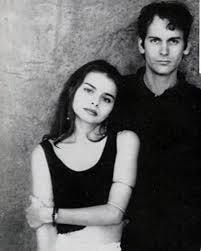
In essence, the record seems to hone in on a sense of spirituality; of connection and understanding. Lyrics tend to be repetitive, evoking a feeling of manifestation, or even prayer in some places. The record does lack direction, but this is intentional. Sandoval does not conform to the ideal of narrative being the crux of a story, and instead focusses on evocation and rumination; building an intimate relationship between artist and listener.
The opening track Drop, is one of two covers on the album and was first released by The Jesus and Mary Train. Sandoval swaps the original’s abrasive, grungy sound for a lilting triple time guitar riff and a child’s glockenspiel, utterly transforming the energy and intention of the track. Critics tend to find it an odd choice of opener, yet to me it makes total sense considering the record’s themes.
Drop’s lyrics are extremely multidimensional, and can be interpreted in different ways - which is very apt in the context of Sandoval’s entire discography, but the theme that struck me most lyrically was the religious imagery it alludes to.
'Til kingdom comes
And through bitten tongues
These eyes get stung
With every curse that's sung
Sandoval’s performance of the track feels almost confessional, and links directly to lyrics later in the album that run to the same theme.
In Feeling of Gaze, the sixth track on the record, Sandoval sings:
Gonna feel a sense of falling
Gonna hush my heart so holyI feel alive with you
I feel a sin fading
In Charlotte, the seventh track, she writes:
Gonna teach her to sin
'Cause I'm always knowing where she's been
Livin' on the wrong side of the tracks
The frequent reference to sin and the self-awareness; almost paranoia that surrounds it, points directly to a hidden conflict. Of course, in true Hope Sandoval fashion, the listener is told nothing explicitly and is instead left to infer as best as they can, which I will try my best to do!
Lyrically, the infatuations throughout the album lie with female characters. The track list features the names Suzanne and Charlotte. Of course, it’s impossible to definitively state that the record is about sapphic love, but when considering these two thematic motifs, the record could certainly be interpreted in this light. In Suzanne, Sandoval writes:
She looks just like my sister,
But she feels just like my man
This ability to unpick and interpret is just one of the wonderful aspects of Sandoval’s writing- her ability to leave the listener to decipher the intentions of her tracks is brave, particularly in an environment where artists (particularly women) are so readily picked apart critically. The mystery behind Hope Sandoval is what draws a listener in, and, over my week of relistening I’ve found the obscurity to be mesmerising, trying ever so hard to join the dots only to find a brand new picture.

When a record feels so sparse instrumentally, every choice seems truly intentional as each harmonic voice is allowed the space to be fully realised and understood by the listener. The opening two tracks feature a glockenspiel alongside guitar and accordion, an odd choice perhaps- so odd in fact that it must have meaning.
On one hand, we may simply link it to the sound of The Velvet Underground’s dreamy hit Sunday Morning, which does share similar themes to those on Bavarian Fruit Bread: introspection, reflection and fragility. However, when we consider the placement of the instrument within the record, featuring only at the beginning and end of the album, perhaps it is acting as a sort of sonic metaphor, mimicking the story arc and in turn creating a loosely cyclical structure.
The melodic lines played on the glockenspiel never quite fully develop, instead twinkling aimlessly above Sandoval’s vocals like fairies flitting around their queen. The sonority is one which resonates with childhood; a sound so pure and delicate representing the innocence and simplicity of life before love.
The glockenspiel is soon exchanged for an earthy bass groove in the fourth track, On The Low, a touch down to reality, perhaps, or a loss of childhood innocence to the hands of love.
Sandoval uses two interlude tracks to portion the album into a structure comparable to that of a three act play: the setup, the confrontation (rising action), and the resolution.
The first interlude, Baby Let Me Go, falls immediately after the genre shift heard in On The Low and is followed by an ode to whimsical heartache in the form of Feeling of Gaze. Here, Sandoval welcomes another drastic instrumental shift, with the addition of a lullaby-like cello accompaniment which acts to hypnotise both listener and singer into a whirlpool of infatuated daydreams.
Charlotte feels more slightly more directed by the narrative; the protagonist plans ways to motion her feelings, yet remains caught up in her own thoughts and daydreams, creating a sense of frustration at the lack of progress.
Gonna teach her to sin
'Cause I'm always knowing where she's been
Livin' on the wrong side of the tracks
And you know she's never
Coming back
Despite the following track Clear Day acting as a hinge into the final dénouement, Sandoval never quite lets the haze clear. The guitar follows a stable riff pattern, creating an anchor for the melodic line, however, the chords alternate between dissonance and openness, swinging back and forth, never quite settling. The less pleasant of the chords (Dsus2) feels a very deliberate pick since the omission of the third leaves the harmony suspended between major and minor- or happy and sad- and sits in this sort of harmonic purgatory. This contrasting with the warmth of G major makes for a pretty unique listening experience; like Sandoval is swinging you from a smokey pendulum, whilst whispering promises of clarity.
The closing third of the album is divided by the reprise of Clear Day, despite being wrongly published as Bavarian Fruit Bread on streaming platforms, which led to the following three tracks being mistitled, and the final being omitted completely.
The reprise welcomes resolution, and is rooted by a synth drone throughout, acting both to contrast the airy sound of prior tracks, and to lead into the following title track- Bavarian Fruit Bread.
The question which has perplexed for decades- why call an album Bavarian Fruit Bread? What does it mean?
Perhaps the image of a humble loaf of fruit bread is symbolic of home comforts, of small pleasures; and perhaps it attributes the final act of Sandoval’s record not into an act of resolution, but one of understanding and settling; finding peace in small joys.
Around My Smile (or Lose Me On The Way on streaming platforms) finishes the album just as ambiguously as it began. Sandoval’s ‘thoughtless feeling inside,’ could be interpreted as freedom or numbness, and the repetition of ‘I’ve got it going on’ loops the listener around, querying what might be going on, and whether it is bad or good.
The glockenspeil from the beginning on the album reappears towards the end of the track, yet the countermelody it plays is rather more urgent and direct than previously, and the instrumental body of the track feels full bodied and rich. There is growth between the beginning and end of the record; Around My Smile is developed, mature and gritty, and despite my adamancy not to compare the two, does sound very much like a Mazzy Star record.
Perhaps critics didn’t hear the growth of Bavarian Fruit Bread because the growth was towards something familiar, that already creatively existed.
Sonically, Bavarian Fruit Bread roots itself in folk, but fails to conform to the genre lyrically considering it’s lack of an obvious forward narrative structure. Perhaps this is why audiences struggle to understand it’s purpose as a record; it is more of a picture book than a novel, but all pictures tell stories, and all colours hold meaning- it is the listener’s quest to find it.
For me, Bavarian Fruit Bread is an album about growing up, Sandoval’s secret story of her childhood- not literally, but emotionally, which culminates in the shy girl finding a woman’s voice. Sandoval navigates relationships through the record, in turn seeking her own place in the world; she struggles with religion, with spirituality and separating daydream and reality; she emerges not with clarity but with experience.
Anything Hope Sandoval does is wonderful. ❤️
This is awesome I'm saving it to read later! Love ur work!!