

Ultraviolence: Problematic or Progressive
Lana del Rey is not simply an artist, but an art movement, dividing nations with her ever controversial commentary of femininity.

When Lana del Rey broke onto the scene in 2012 with ‘Video Games’ and the iconic self-made music video which accompanied it, a new wave of internet culture was slowly rearing it’s head. Tumblr girls were the ‘It Girls’ and a new subculture of teenager was born: emo was out and alt was in, and the woman they worshipped: Lana Del Rey.
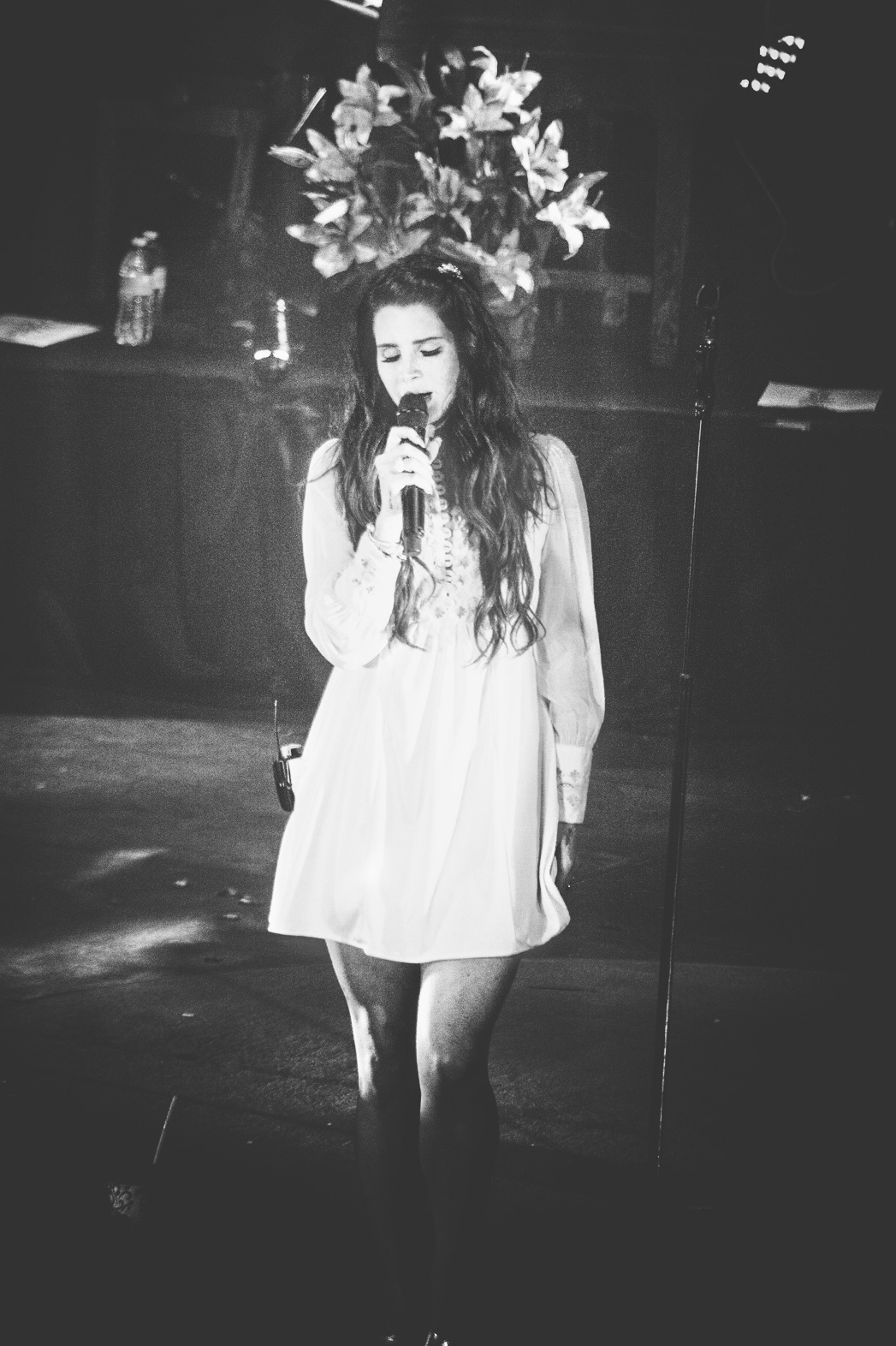
I- like so many- fell into Lana Del Rey’s music in my early teens; listening through clouds of naivety, trying to unpick the stitches of her numerous reference points, to make sense of what it all meant. I suppose that was what appealed to so many of us- she seemed so cool. She was grunge, but girly; interesting and new. Like a modern day siren, she sung about things that were ‘dirty’ and taboo but romantic and exciting - her smokey voice luring in a hoard of Miley Cyrus, Taylor Swift and Katy Perry kids: a dark priestess converting a generation.
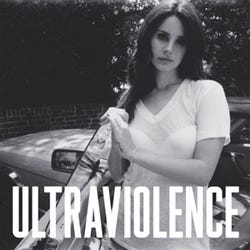
Ultraviolence is Lana Del Rey’s third recorded studio album and released in June 2014 with Polydor and Interscope records. Art and symbolism are key to Del Rey’s music, and in comparison to her previous records, Ultraviolence is sucked dry of all colour; moody and raw. Her hair is darker and the ‘old money’ style tailoring that clad the cover’s of ‘Born to Die’ and ‘Paradise’ is swapped for a basic white t-shirt and classic convertible.
Lana Del Rey faced a lot of criticism for the way in which she broke into the industry. Coming from a middle-class family, critics were quick to jump on the narrative that her father paid her way into the music business following the failure of her previous foray onto the scene under the moniker ‘Lizzy Grant’. Lana and her label vehemently deny these accusations, but to an extent the damage had been done, and Lana Del Rey was labelled as a sad, pretty rich girl.
What critics didn’t understand was that, certainly at the beginning of her career, Lana Del Rey was a character- a fictional woman embodied by Elizabeth Woolridge Grant to form a vessel of storytelling. Much of Del Rey’s music bends reality with imagination, twisting the two together until the strings knot together; a clever feat of musical engineering that allows the artist to explore controversial topics and storylines by shrouding them in anonymity and ambiguity. The critics’ ‘rich girl’ label was seized by Del Rey herself, who reworked and aestheticised it as an element of her character’s persona.
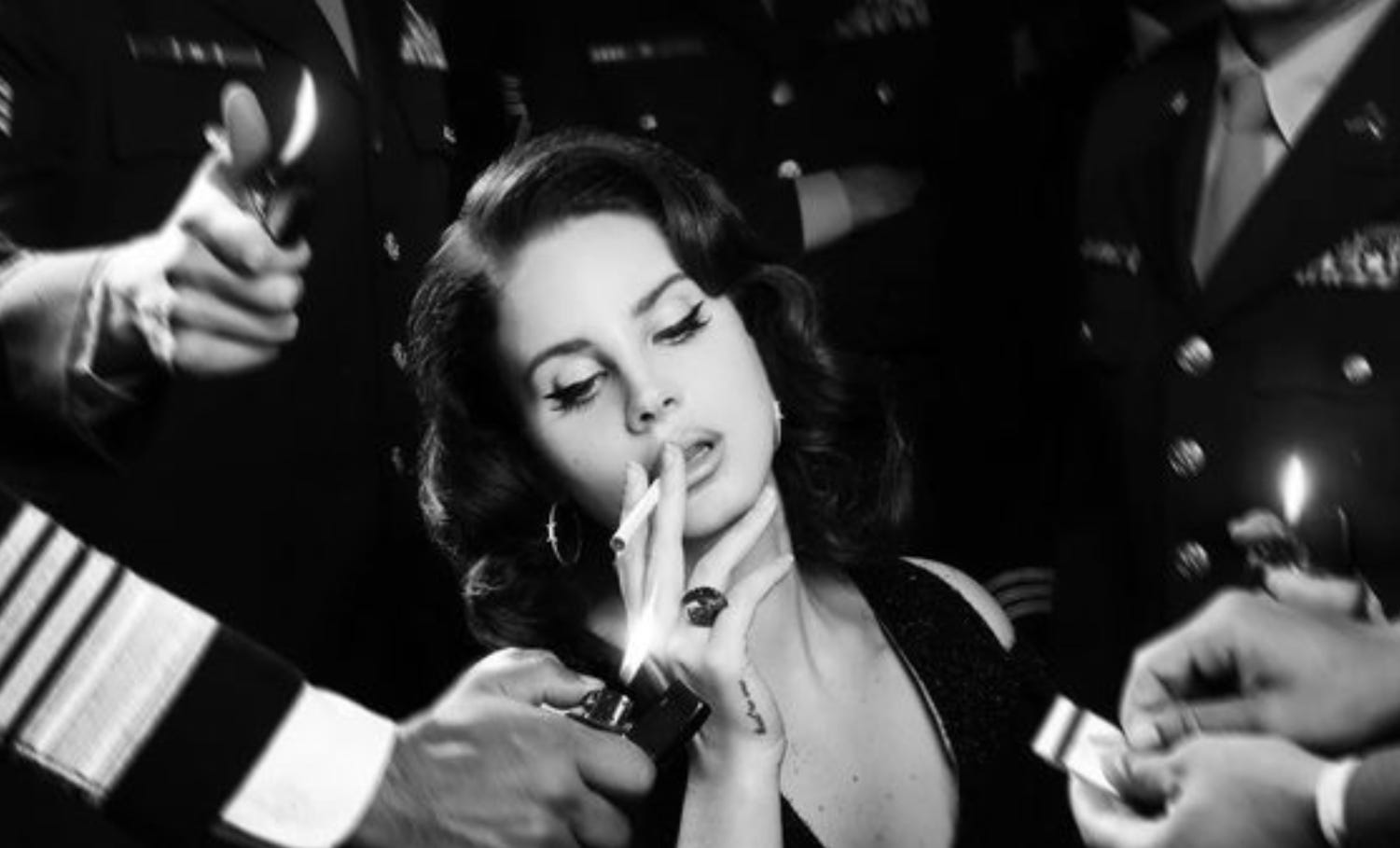
The title ‘Ultraviolence’ is taken from Anthony Burgess’ ‘A Clockwork Orange,’ later reworked for screen by Stanley Kubrick. The novel is a dystopian allegory examining the glamorisation and consequences of violence, not dissimilar to Del Rey’s narratives across Ultraviolence. The key difference is perspective. Burgess’ novel is utterly male-centric, women are reduced to objects of sexual desire or violence, often both in fact. What Ultraviolence does is create a new narrative voice within these subjects without losing the essence at the novel’s core.
Ultraviolence is not the first time that Lana Del Rey twisted the narrative voice of a controversial piece of literature. She famously reworked Nabokov’s disturbing psychological romance, Lolita into two tracks for her debut album and took inspiration from Steinbeck’s ‘Of Mice and Men’ for ‘Gods and Monsters’ from her sophomore album, Paradise.
Ultimately, it is important to consider the character portrayal across Ultraviolence, and understand that the record is not written to be taken at face value.
In a world where Olivia Rodrigo is being slated for wearing babydoll dresses, and Sabrina Carpenter’s Man’s Best Friend album cover is making headlines, how on earth did Lana Del Rey get away with these lyrics?
Primarily, Lana Del Rey wasn’t a popstar aimed at a young audience. She didn’t break through on The Disney Channel or Nickelodeon, in fact- when her debut album released she was already 26, a musical veteran in today’s standard of popstars. Furthermore, America was perceived as a less turbulent political environment in 2014- Obama’s policies largely championed the goal of gender equality, abortion was considered a fundamental right by him, and support was coming into place to ensure the LGBTQ+ community could begin to feel safer. Though work was still to be done, America was a less hostile environment than it is today, particularly for women.
On a first listen, Ultraviolence seems to be a song romanticising domestic abuse, and up to a point, you would be correct. It certainly has the shock factor nailed in terms of rejecting the ideals of modern day feminism.
From my perspective, the narrative can be interpreted in two ways:
A sequel to ‘A Clockwork Orange’.
If we align the character of Jim to the character of Alex in ‘A Clockwork Orange,’ we can notice certain parallels between the nature of the two men. Though Alex is a teenager in the story, we could imagine that Lana is imagining herself as a future lover of Alex as an adult.
Jim raised me up
He hurt me but it felt like true love
Jim taught me that
Loving him was never enough
The romanticisation of violence is explored both by Del Rey and Burgess, the idea of pain being tied to love in Ultraviolence echoes the knot in Burgess’ protagonist’s mind whereby violence is viewed as a romantic artform. If we place Ultraviolence within the same dystopia of A Clockwork Orange, the track becomes independent of reality therefore allowing Del Rey the space to explore these controversial subjects.
A metaphorical take on obsession.
Though for many, it is difficult to overlook the explicitly violent imagery throughout the track, but if we aim to simplify the content to it’s ultimate core we are left with a tragic love story.
Heaven is on earth
I will do anything for you, babe
Blessed is this union
Crying tears of gold, like lemonade
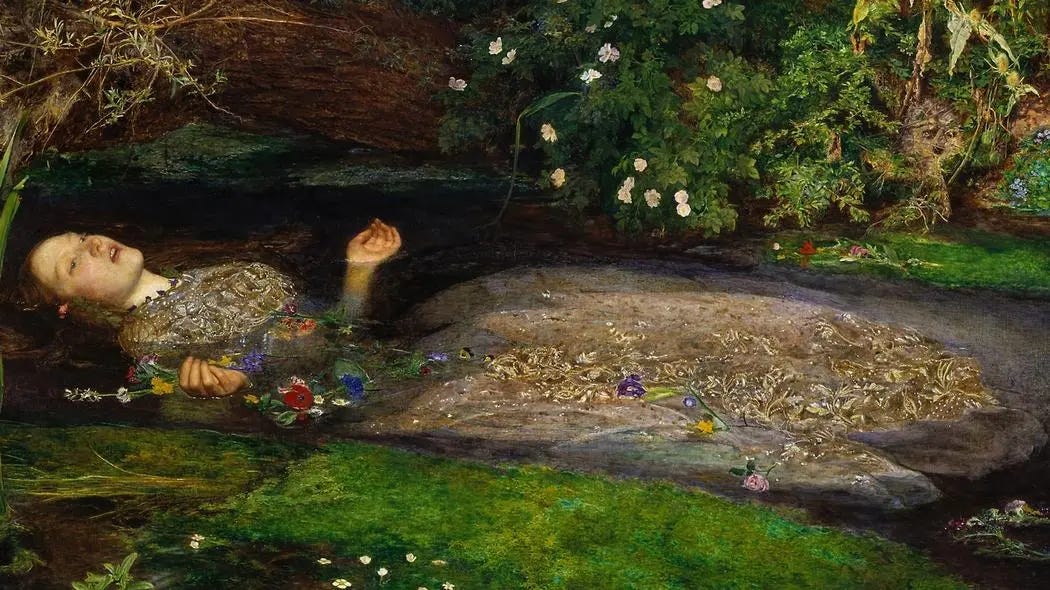
The line between love and infatuation is blurred, a subject Lana Del Rey seems fascinated by. She is quick to place a person on a pedestal, to idolise them and worship them, much like her fans do for her. For a woman with a degree in philosophy it is unsurprising how multifaceted and subjective her storytelling can be, and when we do take the story at its face value, we find a woman completely overcome by love. Almost a modern day Ophelia, her mind is twisted and ruptured by a desire so deep that it consumes her being; blinded by obsession.
Critics were quick to jump onto the male-centric narratives that suffuse Ultraviolence, many viewed them as a step back into the past following the rise of the Riot Grrrl movement, pioneered by bands like Bikini Kill and Bratmobile. The industry expectation of alternative female artists was to go against the grain so much that when Del Rey went with it, the world went up in arms. Lana Del Rey never helped herself much when it came to the ‘anti-feminist’ rumours in the early days. When Fader Magazine journalist Duncan Cooper asked her about feminism during Ultraviolence’s press run, she responded, “when people bring up feminism, I’m like God. I’m just really not that interested.” Though music critic Lindsay Zoladz harboured the view that Lana Del Rey’s music was an alternative to “empowerment as the default aspiration of a pop star,” such a stark contrast would take some adjustment period for the vast majority.
Furthermore, the juxtaposition between the almost religious infatuation with which Del Rey discusses men across the record, compared to her treatment of female characters is dire. Prostitutes, addicts and victims are given the spotlight to whinge about their dislike for just about everything other than their male counterpart. At a surface level, it feels like reaching to the depths of society in order for these darker more complex female characters to have a voice is brave of Del Rey, yet the fact that their voice is only ever heard within a male-centric dialogue perhaps does more damage than good, almost objectifying these women through their own desperation.
Though completely independent of Del Rey herself, I think there is certainly something to be said of her fans’ creativity when it comes to the interpretation of her music. This fan-made music video links the supposed prostitute character in ‘Sad Girl’ to the wickedly iconic Elvira Hancock of Brian De Palma’s Scarface, a character who essentially holds an immense level of power over the male protagonist, not in a straightforwardly empowering sense but instead by revealing the damage caused by a patriarchal society motivated by greed.
Even in her own lyrics, Del Rey seems to be aware of the dangerous implications of interpretation in her music, writing in Brooklyn Baby that “they judge me like a picture book, by the colours like they forgot to read.” These shreds of self awareness that pepper the record give a listener a glimpse into the real Lana Del Rey; a woman who is putting herself in a situation of intense criticism and risking her image for her art, hoping the listener will seek the deeper meaning in her music.
For many a listener, however, the so-called deeper meaning is challenging to uncover, particularly in the context of modern-day feminism. Throughout the album, Del Rey challenges the expectations of a female voice through themes of dependency, submissiveness and fragility. Perhaps one of the most vulnerable and beautiful tracks is Old Money, where she compares the idea of established wealth to a relationship built on legacy rather than passion.
Her voice feels tired, almost desperate- the sense of giving everything to a person yet lacking the emotional strength to do so. The haunting imagery behind the opening lyric, “blue hydrangea, cold cash divine, cashmere cologne and white sunshine” is crafted with such lexical skill for each adjective to suck the life from the noun, which in any other case would have overtly positive connotations.
The character of Lana Del Rey in Ultraviolence is complex; a version of the female experience which hadn’t necessarily been explored musically before by a woman to this extent. By using the female character tropes that she does, it certainly is valid to feel as though they are slightly cliche, but ultimately this was unchartered territory, and if we look beyond Ultraviolence, her female characterisations gain depth and integrity.
The idea of a woman being ‘anti-feminist’ is a truly fascinating concept. Lana Del Rey, among a relatively large number of other female artists has had this allegation thrown at her throughout her career.
Historically, women were considered passive and ornamental, vessels to bore children, soft and subservient. Men, on the other hand were intelligent beings, practically minded, physically strong and the protector. When women began to rewrite these standards, these expected behaviours and aesthetics were abandonned; rejected in order to showcase a woman’s independence. We need only look back a century to the flappers of the 1920s, the dropped waistlines, blunt bobs and darkened make up to witness the liberation of the female being.
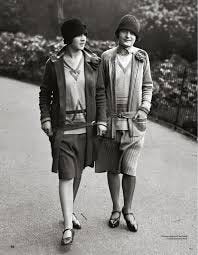
By the time that second-wave feminism launched in the 1960s, thinkers like Laura Mulvey began considering the link between men and women in the context of feminism, coining the phrase “the male gaze,” when referring a to a woman simply existing to satisfy a man. Del Rey’s relentless use of hyperfeminine, submissive imagery and language across the record, does not adhere to the ideals of second wave feminism, yet by the time of the record’s release, the feminist movement had progressed hugely.
By the 2010’s, feminism was framed entirely differently: femininity had been reclaimed and autonomy was celebrated. The idea that a woman did not need to look a certain way, or reject ‘so called’ feminine ideals in order to feel empowered was a key shift. Del Rey reflected in a 2014 interview with The Fader magazine that her “idea of a true feminist is a woman who feels free enough to do whatever she wants.” Her comments, though liberal on a surface level, felt largely white-middle-class centric and naive, but deliver an insight into the ‘why’ behind her choices on the record.
I suppose the interaction between Lana Del Rey and the feminist movement is so interesting because she herself rejects the idea of being a feminist, yet the fact she is a woman makes it impossible to dismiss the link between the two.
The label of ‘anti-feminist’ when given to a woman is contradictory; the phrase itself becomes anti-feminist. Lana Del Rey’s thematic choices should be more wisely refined in regards to the recurring romanticisation of abuse, and the narrative voices should show a broader spectrum of the female experience, yet for many, Ultraviolence remains an artistic allegory to women who did not feel strong, who loved feeling in love, and who hurt at the hands of men.
Anthony Burgess’ ‘A Clockwork Orange,’ is viewed by critics as a classic; a pinnacle of dystopian fiction, yet Lana Del Rey’s response to the novel was considered weak; a step back for the modern day woman. By using themes considered to be problematic, Lana Del Rey works them into a narrative that is in fact progressive, willing the listener to question what it means to be a woman and, more importantly, what it means to be a female artist exploring psychologically controversial topics.
Love her song “Young and beautiful”
I think she was courting controversy intentionally during this stage of her career. It felt at the time as a fan, every little thing she did would get a full writeup/analysis… I still remember when the SNL performance caused such a fiasco.